











Box Dimensions Guide: How to Measure Boxes Accurately

The Ultimate Guide to Box Dimensions: How to Measure Packaging Accurately
Accurate box measurements are essential for creating packaging that protects products, reduces shipping costs, and delivers a professional unboxing experience. Whether you operate an e-commerce business, manufacture custom packaging, or manage product distribution, understanding how to measure a box correctly can prevent costly production errors and packaging problems.
Even a small measurement difference can affect product fit, material requirements, shipping expenses, and storage efficiency. Choosing the correct length, width, and height also helps packaging manufacturers produce boxes that meet your exact specifications.
This box dimensions guide explains how to measure different box styles, understand inside and outside dimensions, account for material thickness, and avoid common measurement mistakes. By following these practical steps, you can provide accurate specifications and make better packaging decisions for your business.
1. Why Accurate Box Dimensions Matter
Box dimensions directly affect how products fit, how packaging performs during transportation, and how efficiently businesses manage inventory.
For e-commerce brands and manufacturers, accurate measurements help maintain consistency throughout the packaging process, from design and prototyping to production and delivery.
Here are the main reasons accurate box measurements matter.
Product Fit and Protection
Packaging should hold a product securely without putting unnecessary pressure on its surface or leaving excessive empty space.
Incorrect measurements can cause several problems:
Products may not fit inside the box.
Fragile items may move during transportation.
Excessive empty space may require additional protective materials.
Tight packaging may damage products during insertion or removal.
Measuring products correctly before ordering custom boxes helps manufacturers create packaging with suitable clearance and protection.
Shipping Costs and Dimensional Weight
Shipping carriers often calculate transportation charges using dimensional weight, also known as DIM weight. This calculation considers the package’s external dimensions rather than just its actual weight.
A larger package can therefore cost more to ship, even when it contains a lightweight product.
For businesses shipping products across the United States, accurate outside measurements help with:
Estimating shipping costs.
Selecting appropriate shipping cartons.
Reducing unnecessary package volume.
Improving warehouse and transportation efficiency.
Manufacturing Accuracy
Packaging manufacturers use box dimensions to create structural designs, cutting dies, printing layouts, and production specifications.
Incorrect measurements can result in:
Misaligned folding panels.
Incorrect insert dimensions.
Poor product fitting.
Material waste.
Delayed production and additional expenses.
Providing accurate specifications from the beginning helps minimize revisions and maintain consistent packaging quality.
2. The Golden Rule of Box Measurement: Length × Width × Height
The standard method for measuring a rectangular packaging box is
Length × Width × Height (L × W × H)
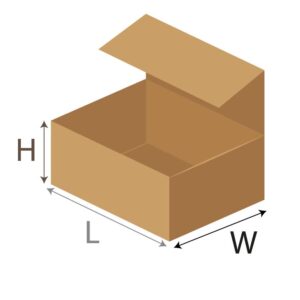
L
Length
Longest opening dimension
W
Width
Shorter opening dimension
H
Height
Depth from opening to base
Understanding the correct orientation is important because measuring the wrong sides can lead to incorrect packaging specifications.
Length: Measure the Longest Side
Length is generally the longest horizontal dimension of the box opening.
To measure it:
Place the box on a flat surface.
Open the top flaps if necessary.
Identify the longest side of the opening.
Measure from one inside wall to the opposite inside wall when specifying internal dimensions.
Width: Measure the Shorter Side
Width is the shorter horizontal dimension of the box opening.
To measure it:
Identify the shorter side of the opening.
Position your ruler across the opening.
Measure from one inside wall to the opposite inside wall.
Height: Measure from Opening to Base
Height refers to the vertical depth of the box.
For a standard rectangular box, measure from the bottom inside surface to the top edge of the box.
Keep in mind that box styles can have different structural configurations. For example, a mailer box, rigid box, and tuck-end box may require slightly different measurement references.
Important: Always identify whether you are recording internal or external measurements before sharing dimensions with a packaging manufacturer.
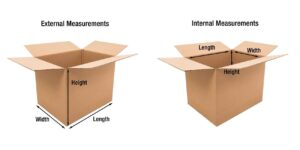
3. Inside Dimensions vs. Outside Box Dimensions
One of the most common sources of packaging confusion is the difference between inside and outside dimensions.
Although both measurements describe the same box, they serve different purposes.
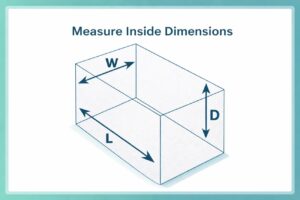
How to Measure a Box? Step-by-Step Guide
Carton Boxes Supplier in KL & Selangor | Boxcycles
What Are Inside Box Dimensions?
Inside dimensions describe the usable space available inside the packaging.
They are measured from the interior surfaces of the box.
For example, if a box has internal dimensions of:
Length: 10 inches
Width: 8 inches
Height: 4 inches
The usable internal space is 10 × 8 × 4 inches.
Inside measurements are particularly important for:
Determining whether a product fits.
Designing custom inserts and dividers.
Creating protective packaging for fragile products.
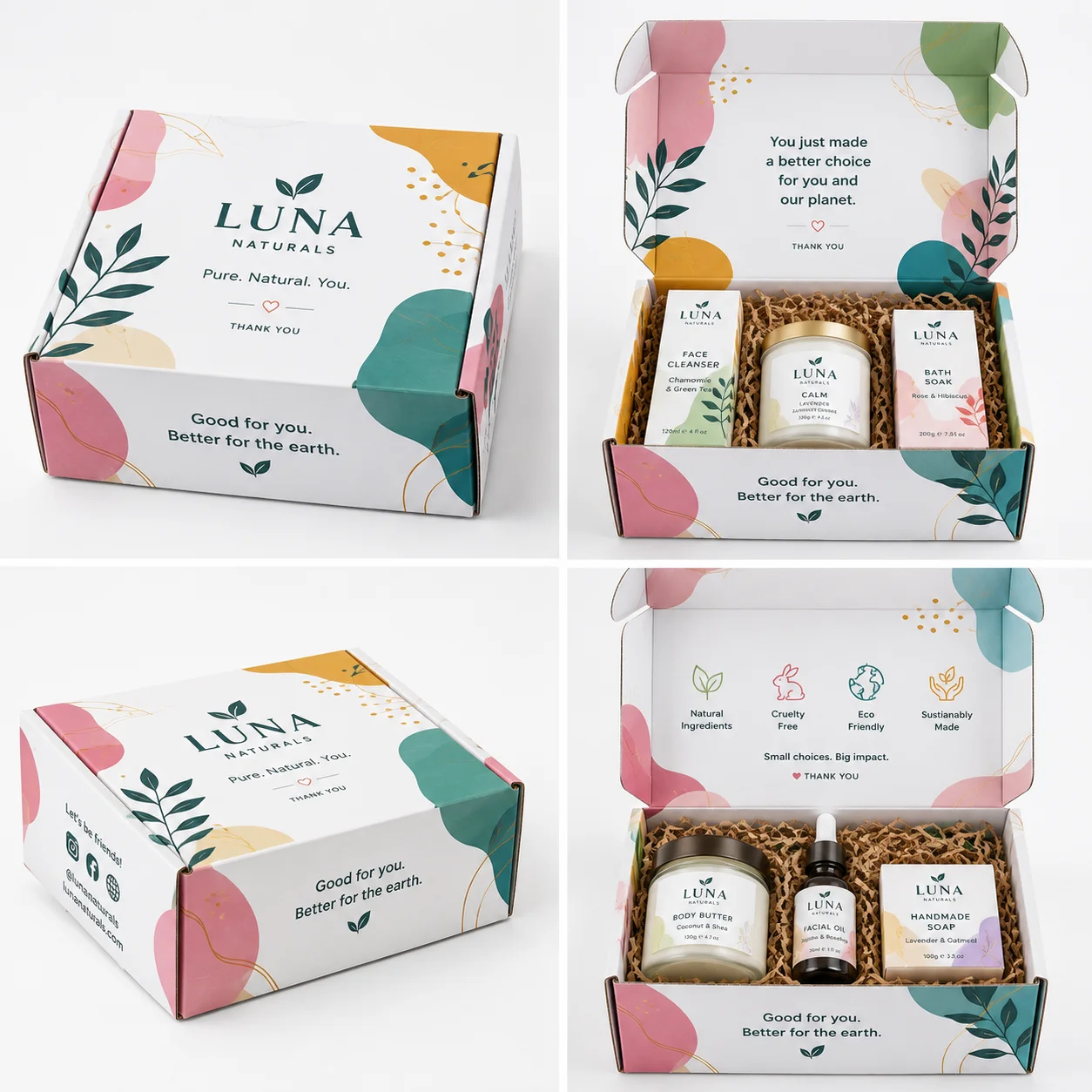
Ordering custom retail and subscription boxes.
Ensuring consistent product presentation.
For products that require foam inserts, cardboard dividers, or protective cushioning, additional clearance may be necessary.
What Are Outside Box Dimensions?
Outside dimensions describe the total external size of the assembled box.
They are measured from the outermost surfaces, including the packaging material.
For example, a corrugated shipping box may have external dimensions of 10.5 × 8.5 × 4.5 inches, while its internal dimensions are 10 × 8 × 4 inches.
Outside measurements are important for:
Calculating dimensional shipping weight.
Planning warehouse storage.
Determining pallet configurations.
Checking shipping carrier size restrictions.
Estimating transportation requirements.
Inside vs. Outside Dimensions: Key Differences
| Measurement | Inside Dimensions | Outside Dimensions |
|---|---|---|
| Purpose | Product fitting | Shipping and storage |
| Reference point | Interior walls | Exterior surfaces |
| Product clearance | Essential | Not sufficient alone |
| Material thickness | Excluded | Included |
| Common application | Custom product boxes | Shipping cartons |
Which measurement should you provide?
If you are ordering custom packaging to hold a specific product, provide the product dimensions and required internal box dimensions.
If you are calculating shipping costs or planning warehouse storage, use the external dimensions.
Ideally, provide both to your packaging manufacturer to avoid confusion during production.
4. Step-by-Step Guide: How to Measure Different Box Styles
Different packaging structures require different measurement approaches. While the basic length, width, and height system remains consistent, the reference points may vary depending on the box design.
Before measuring, gather these tools:
Measuring tape or ruler.
Digital caliper for smaller or more precise measurements.
Flat working surface.
Notepad or measurement sheet.
Existing box or product sample, if available.
For accurate results, measure in inches or millimeters and use the same unit throughout your specifications.
A. How to Measure a Rectangular Box
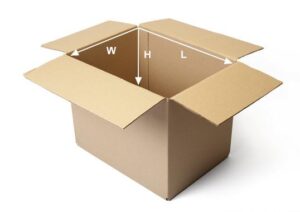
Rectangular boxes are commonly used for shipping cartons, subscription boxes, product packaging, and retail packaging.
Follow these steps:
Place the box on a flat surface.
Open the top flaps completely.
Measure the longest internal horizontal side to determine length.
Measure the shorter internal horizontal side to determine width.
Measure vertically from the inside bottom panel to the top edge to determine height.
Record all three measurements in the correct order.
Example:
A rectangular product box may have the following specifications:
| Dimension | Measurement |
|---|---|
| Length | 10 inches |
| Width | 6 inches |
| Height | 4 inches |
Final dimensions: 10 × 6 × 4 inches (L × W × H).
B. How to Measure a Square Box
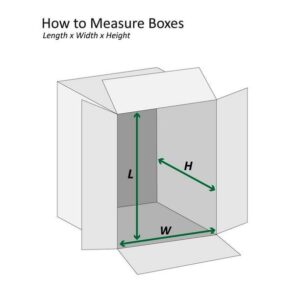
Square boxes have equal length and width measurements, although their height can vary.
They are commonly used for:
Gift packaging.
Candle boxes.
Bakery packaging.
Cosmetic gift sets.
Retail product packaging.
To measure a square box:
Place the box on a flat surface.
Measure one side of the opening.
Measure the adjacent side to confirm the width.
Measure the vertical depth from the bottom to the opening.
Record the dimensions.
Example:
A square gift box might measure:
Length: 6 inches.
Width: 6 inches.
Height: 3 inches.
Final dimensions: 6 × 6 × 3 inches.
Remember that a square box does not necessarily have equal height and width. Only the length and width are equal.
C. How to Measure a Custom Tuck-End Box
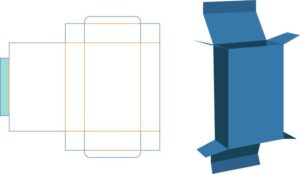
Tuck-end boxes are widely used in cosmetic, soap, pharmaceutical, food, and retail packaging.
Unlike standard shipping cartons, these folding cartons have top and bottom flaps that fold inward to close the package.
There are two common variations:
Straight Tuck End (STE): The top and bottom flaps tuck in the same direction.
Reverse Tuck End (RTE): The top and bottom flaps tuck in opposite directions.
To measure an assembled tuck-end box:
Assemble the box completely.
Identify the main rectangular body.
Measure the longest side of the body for length.
Measure the shorter side for width.
Measure the body depth from the bottom panel to the top edge, excluding projecting closure flaps.
Record the measurements and specify the box style.
Example:
A custom soap box may have these dimensions:
Length: 3 inches.
Width: 2 inches.
Height: 4 inches.
Final dimensions: 3 × 2 × 4 inches.
For folding cartons, it is also important to consider the board caliper, folding allowances, and closure design. If you are providing measurements for a new packaging project, share the actual product dimensions and a reference image whenever possible.
D. How to Measure a Mailer Box
How to Measure a Box?
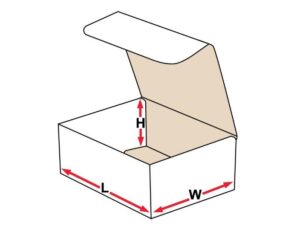
Mailer boxes are popular among e-commerce brands because they provide a secure structure and an attractive unboxing experience.
To measure a mailer box:
Open the hinged lid completely.
Identify the usable internal base area.
Measure the internal length.
Measure the internal width.
Measure the internal depth from the base to the top edge of the side walls.
Record any additional insert dimensions separately.
If the mailer includes an EVA foam insert, cardboard insert, or divider, measure the insert independently.
This ensures that both the product and its protective components fit correctly.
5. Common Box Measurement Mistakes to Avoid
Even experienced business owners can make measurement errors when preparing packaging specifications. These mistakes can affect product fit, structural performance, and manufacturing costs.
Here are some common issues to watch for.
1. Confusing Inside and Outside Dimensions
This is one of the most frequent packaging measurement mistakes.
For example, a product measuring 8 × 6 × 3 inches cannot necessarily fit inside a box with the same external dimensions.
The packaging material occupies space, reducing the usable interior.
How to avoid it: Always label your measurements as internal or external.
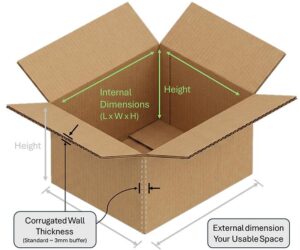
2. Ignoring Material Thickness
Packaging material thickness directly affects the final dimensions of a box.
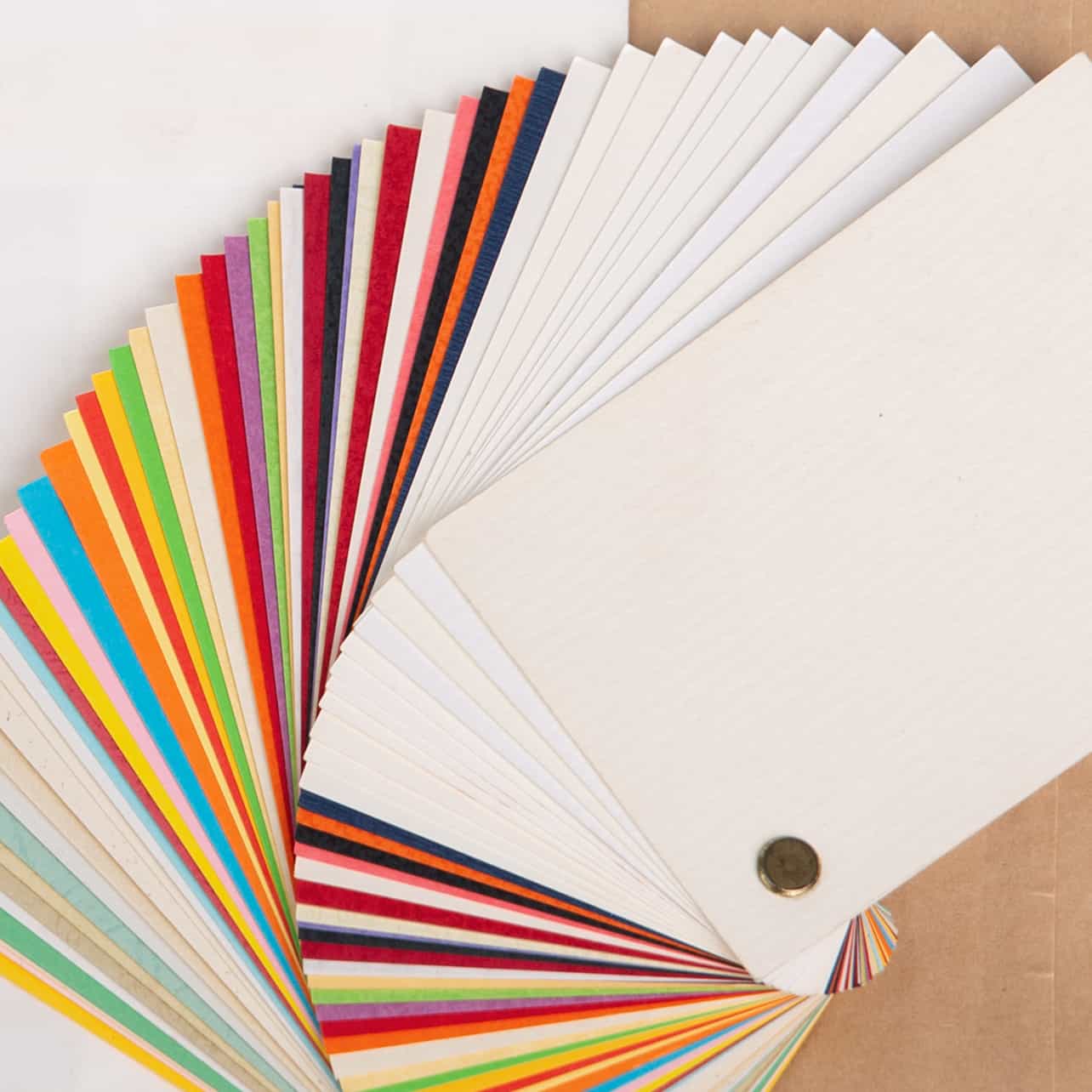
For example, corrugated cardboard consists of linerboards and a fluted medium. The flute structure adds thickness to the walls.
Common corrugated flute profiles include:
E-flute: Thin profile, often used for retail packaging and lightweight shipping applications.
B-flute: Offers good stacking strength and cushioning.
C-flute: Commonly used for general shipping cartons.
BC double-wall: Combines two flute layers for additional strength and protection.
How to Choose the Best Fluting for Your Packaging | Packaging Box US
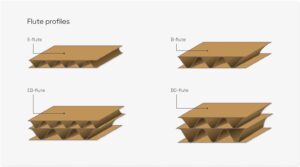
When converting internal dimensions into external dimensions, account for the thickness of the material on all relevant sides.
For a simple rectangular box:
External length is approximately internal length plus twice the wall thickness.
The same principle applies to width and height, although the exact conversion depends on the box construction and closure design.
How to avoid it: Confirm the board grade, flute profile, and material thickness with your packaging manufacturer before finalizing dimensions.
3. Measuring the Wrong Orientation
Some people measure the shortest side as length or confuse width with height.
This can create incorrect cutting layouts and packaging specifications.
How to avoid it: Always follow the L × W × H convention and clearly identify the box opening and base.
4. Including Flaps in the Box Height
For folding cartons and mailer boxes, closure flaps are not necessarily part of the usable internal height.
Including them can result in incorrect specifications.
How to avoid it: Measure the main box body separately from the closure flaps unless your manufacturer specifically requests overall assembled dimensions.
5. Forgetting Product Clearance
A box should not always match the exact dimensions of the product.
Some products need additional room for protective inserts, tissue paper, foam, or cushioning.
How to avoid it: Consider the product’s shape, fragility, orientation, and protective materials before finalizing internal dimensions.
6. Using Inconsistent Measurement Units
Mixing inches, centimeters, and millimeters can create serious manufacturing errors.
For example, confusing 10 mm with 10 inches can completely change the packaging design.
How to avoid it: Specify one measurement unit clearly and use it consistently across all packaging documents.
6. Understanding Standard Packaging Box Sizes
There is no single universal box size suitable for every product. Standard packaging box sizes vary according to product categories, shipping requirements, and packaging structures.
However, businesses can use common size ranges as starting points when planning packaging.
The following are illustrative dimensions, not official carrier or industry standards.
| Box Type | Example Dimensions (L × W × H) |
|---|---|
| Small product box | 4 × 3 × 2 inches |
| Soap box | 3 × 2 × 4 inches |
| Cosmetic box | 4 × 3 × 6 inches |
| Candle box | 4 × 4 × 5 inches |
| Subscription box | 10 × 8 × 4 inches |
| Small mailer box | 8 × 6 × 3 inches |
| Shipping box | 12 × 10 × 8 inches |
These examples can help businesses estimate their packaging requirements before requesting a custom design.
How to Choose the Right Box Size
Consider the following factors before selecting a box:
Product length, width, and height.
Product weight and fragility.
Required protective materials.
Packaging style and closure mechanism.
Shipping and storage requirements.
Material strength and thickness.
Branding and presentation requirements.
For custom packaging, selecting the right dimensions is only one part of the process. Structural design, board selection, and finishing options also contribute to the final packaging performance.
7. How to Calculate Box Volume
Once you know the length, width, and height, you can calculate the internal volume of a rectangular box.
The formula is:
For example, consider a box with internal dimensions of 10 × 8 × 4 inches.
Example internal box volume
320 in³
Cubic inches
This means the box has an internal volume of 320 cubic inches.
Volume calculations are useful for:
Estimating storage capacity.
Comparing different packaging sizes.
Planning warehouse space.
Evaluating packaging efficiency.
Estimating how much space a product occupies.
However, volume alone does not determine whether a product will fit. Its shape, orientation, and clearance requirements must also be considered.
8. Packaging Measurement Checklist Before Ordering Custom Boxes
Before sending your specifications to a packaging manufacturer, review the following checklist.
Custom packaging measurement checklist
Reset checklist
Providing complete specifications helps your packaging manufacturer understand your requirements and recommend an appropriate structural design.
Conclusion: Get Your Box Dimensions Right Before Production
Accurate box measurements are essential for creating functional, cost-effective, and professional packaging. Understanding the difference between inside and outside dimensions, following the length × width × height convention, and accounting for material thickness can prevent common packaging problems.
Whether you need retail cartons, custom mailer boxes, shipping cartons, or premium product packaging, always measure carefully and confirm your specifications before production.
Following this box dimensions guide will help you communicate your requirements clearly, reduce manufacturing errors, and select packaging that fits your products properly.
If you are planning a custom packaging project, working with an experienced packaging manufacturer can help you determine the right dimensions, materials, and structural design for your products.
Frequently Asked Questions (FAQs)
1. What is the correct order for box dimensions?
The standard order is Length × Width × Height (L × W × H). Length is generally the longest horizontal side of the opening, width is the shorter horizontal side, and height is the vertical depth from the base to the opening.
2. Are box dimensions measured inside or outside?
It depends on the purpose. Inside dimensions are used to determine product fit and usable space, while outside dimensions are used for shipping calculations, warehouse storage, and transportation planning.
3. How do you measure a box without a measuring tape?
You can use a standard ruler, measuring stick, or digital caliper for smaller boxes. Measure each side carefully and record the dimensions in a consistent unit.
4. Does cardboard thickness affect box dimensions?
Yes. Cardboard and corrugated board thickness reduce the available internal space and increase the overall external dimensions. Always consider material thickness when designing custom packaging.
5. What are standard packaging box sizes?
Standard packaging sizes vary by product and application. Common examples include 4 × 3 × 2 inches for small products, 3 × 2 × 4 inches for soap boxes, and 12 × 10 × 8 inches for general shipping applications.
6. How much extra space should I leave inside a box?
The required clearance depends on product dimensions, fragility, and protective materials. Lightweight products may need minimal clearance, while fragile items may require additional space for foam inserts or cushioning.
7. How do you calculate the volume of a box?
Multiply its length by width by height. For example, a box measuring 10 × 8 × 4 inches has an internal volume of 320 cubic inches.
8. Should I measure a box before or after assembly?
For accurate assembled dimensions, measure the box after assembly. This is particularly important for folding cartons, mailer boxes, and custom structural packaging because folding and closure designs can affect the final dimensions.