





The Most Popular Types of Tapes and Their Uses

The Most Popular Types of Tapes and Their Uses
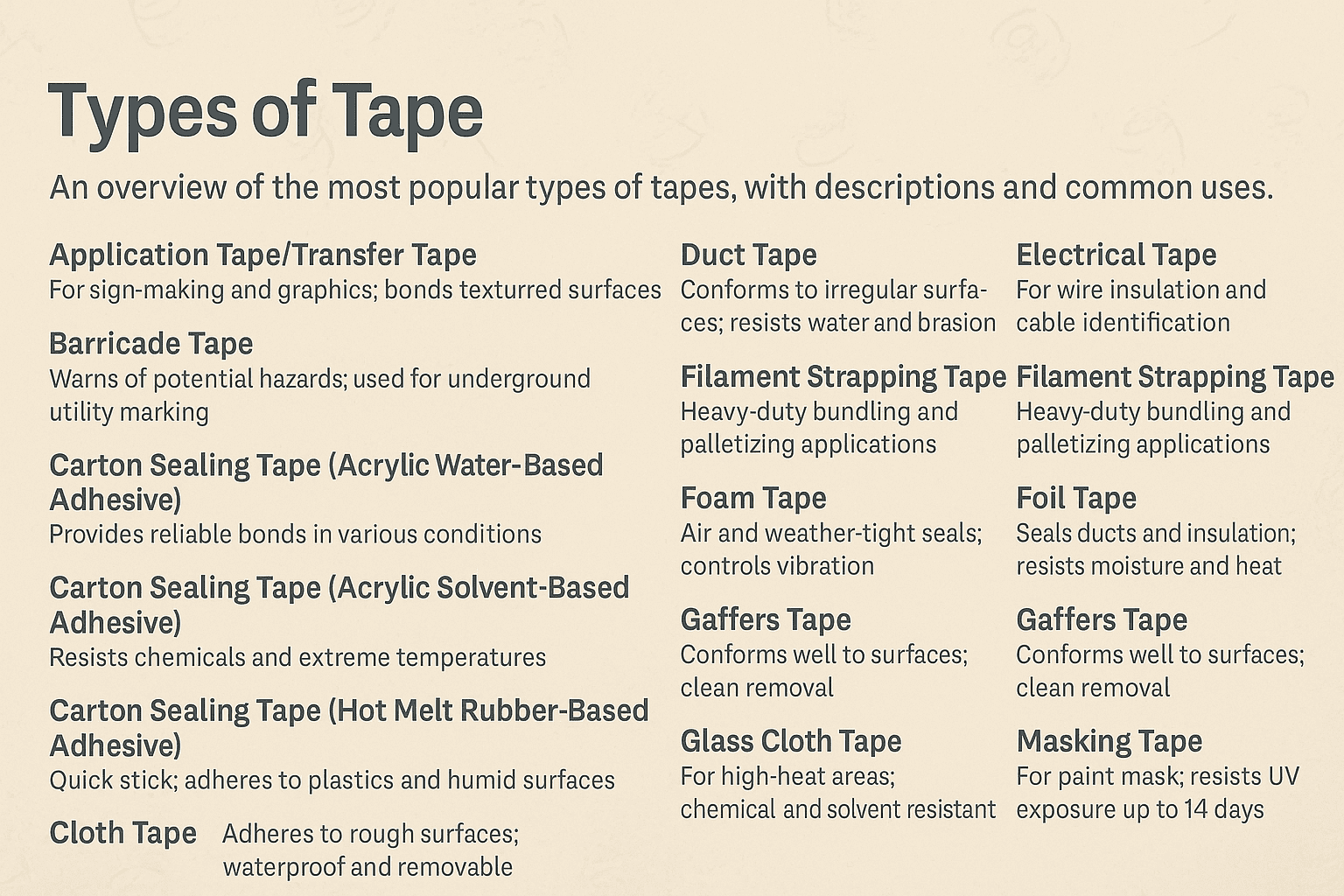
There are many different types of tapes available, each with its own features and uses. Here’s an overview of some of the most common types of tape, along with their benefits and typical applications.
1. Application Tape/Transfer Tape
What it is:
Also known as “premask,” application tape is essential in sign-making and digital graphics. It helps transfer cut vinyl and graphics from the release liner to the surface.
Common Uses:
It’s great for working with textured, rough surfaces and is often used in industries like printing, signage, and packaging.
2. Barricade Tape
What it is:
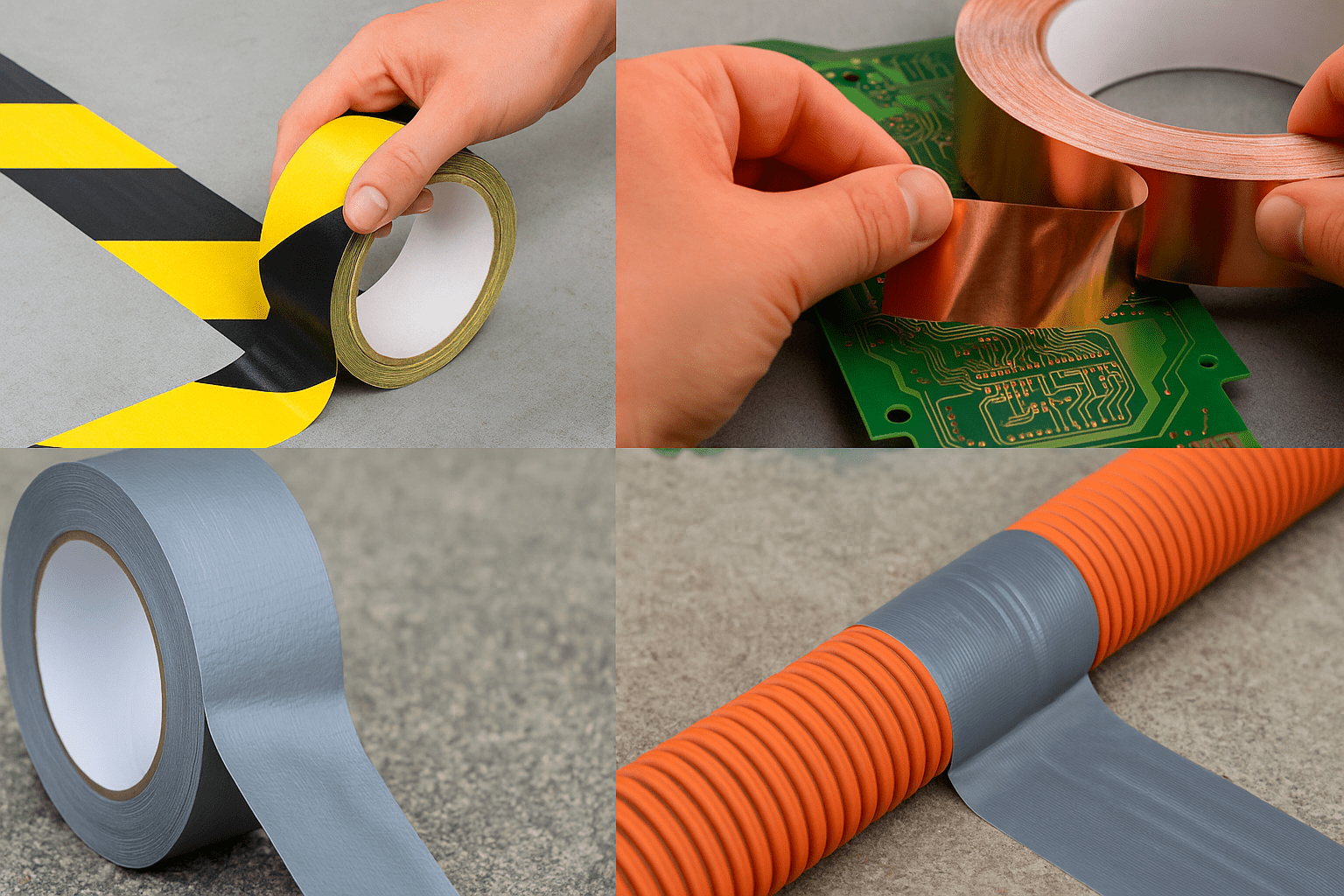
Brightly coloured tape is used for warning people about potential hazards. It often comes with bold patterns like yellow-black or red-white stripes and messages like “Caution” or “Danger”.
Common Uses:
Used in construction sites and dangerous areas and to protect underground utility installations.
Types of tape
3. Carton Sealing Tape (Acrylic Water-Based Adhesive)
What it is:
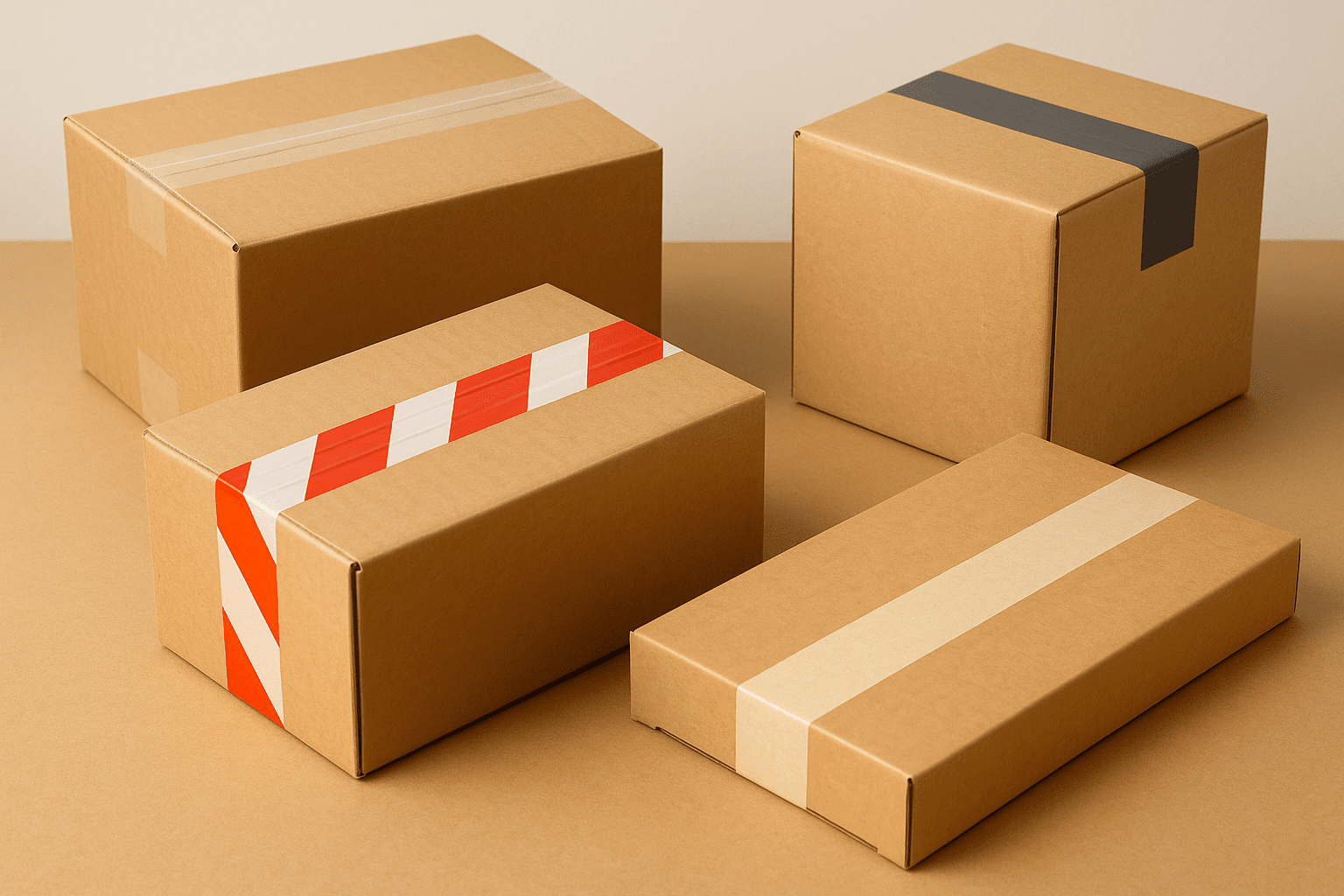
This tape uses water-based adhesives, making it a strong and durable choice for many industries. It’s also stable in humid conditions and temperature changes.
Common Uses:
Great for sealing cartons and boxes, especially in areas with fluctuating temperatures or humidity.
4. Carton Sealing Tape (Acrylic Solvent-Based Adhesive)
What it is:
Solvent-based acrylic adhesives are known for their strong chemical resistance, making them perfect for environments where exposure to chemicals or extreme temperatures is common.
Common Uses:
Used for sealing boxes that require high durability and longevity, especially in harsh environments.
5. Carton Sealing Tape (Hot Melt Rubber-Based Adhesive)
What it is:
This tape provides quick stick, making it perfect for fast-paced environments. It works well in a variety of temperatures and can stick to challenging surfaces like polyethylene.
Common Uses:
Ideal for industries that need fast packaging or work in high humidity or cold temperatures.
6. Carton Sealing Tape (Natural Rubber-Based Adhesive)
What it is:
Natural rubber provides a very sticky surface, allowing the tape to stick even with minimal pressure. It’s great for recycled cartons and cold environments.
Common Uses:
Used in sealing boxes that need to be opened and resealed easily without leaving any residue.
Types of tape
7. Cloth Tape
What it is:
Cloth tape is strong, waterproof, and resistant to tearing. It’s hand-tearable, making it easy to use for bundling or packaging. Why do you need Types of Tapes in your business
Common Uses:
Used for both interior and exterior applications like repairs, bundling items, and crafts.
8. Double-Sided Tissue Tape
What it is:
This tape has adhesive on both sides and offers strong bonding on most surfaces. It’s durable and can resist environmental factors like UV light and ageing.
Common Uses:
Often used in industrial and manufacturing settings for splicing, bonding, and holding materials together.
9. Duct Tape
What it is:
Duct tape is known for its strong adhesion and water resistance. It’s hand-tearable and is available in a variety of colours.
Common Uses:
Used for sealing ducts, bundling items, and repairing vinyl or other materials.
10. Electrical Tape
What it is:
Electrical tape is used to insulate wires and cables. It comes in different colors for easy identification of different electrical phases. check out new Types of Tapes
Common Uses:
Ideal for cable insulation and splicing, especially in electrical work and electronics.
11. Filament Strapping Tape
What it is:
This strong tape is reinforced with fiberglass filaments, giving it high tensile strength.
Common Uses:
Used for heavy-duty bundling, palletizing, and strapping in industries like shipping and logistics.
12. Foam Tape
What it is:
Foam tape is soft, spongy, and creates air-tight seals. It is very durable and resistant to environmental conditions. check out ours other product like chocolate boxes candle boxes
Common Uses:
Perfect for industries like automotive, HVAC, and construction, where sealing and vibration control are needed.
13. Foil Tape
What it is:
Foil tape comes in different varieties, including aluminum and copper, offering excellent adhesion and resistance to heat and moisture.
Common Uses:
Used in insulation, sealing systems for appliances, and electrical shielding.
14. Gaffers Tape
What it is:
Gaffers tape is a cloth-based tape with a low-gloss finish. It’s designed for use in environments where visibility needs to be minimal, such as concerts or trade shows. everyone need for packaging boxes and Types of Tapes
Common Uses:
Used for securing cables, marking spots on floors, and holding down equipment in live events or shows.
15. Masking Tape (Painter’s Tape)
What it is:
Painter’s tape is designed for clean removal, even after a long period. It’s resistant to UV rays and doesn’t damage surfaces upon removal. explore a new Types of Tapes
Common Uses:
Perfect for paint masking, light-duty splicing, and holding items in place during painting projects.
16. Polyimide Tape
What it is:
Polyimide tape is a thin, conformable tape known for its high resistance to heat and abrasion. It’s often used in high-temperature environments. packaging box proving all Types of Tapes
Common Uses:
Common in electronics and electrical work, protecting components during soldering and manufacturing processes.
17. PTFE Tape
What it is:
PTFE tape is used to seal threaded pipes. It lubricates the threads to prevent them from seizing up when unscrewed. This is a best Types of Tapes
Common Uses:
Ideal for plumbing and other pipe thread sealing applications.
18. Vinyl Tape
What it is:
Vinyl tape is durable and resistant to various environmental factors like sunlight, moisture, and chemicals.its is the best Types of Tapes
Common Uses:
Used for safety marking, color coding, and sealing in various industries.
19. Warning Tape
What it is:
Warning tape is used for marking hazardous areas or unsafe zones.
Common Uses:
Perfect for construction sites, manufacturing facilities, and outdoor environments where safety warnings are needed.
Conclusion:
There are many types of tapes available, each designed to handle specific tasks. Whether you’re sealing packages, protecting surfaces, or creating safety barriers, choosing the right tape for your needs is essential. Be sure to consider the material, adhesive strength, and application when selecting the best tape for your project. we are providing different Types of Tapes
Explore the other aritcal for read type of types
FAQ’s
1. What is the difference between application tape and transfer tape?
Answer:
Application tape, also known as transfer tape, is designed to transfer vinyl or graphics from the release liner to the surface you want to apply it to. It’s ideal for use in sign-making and digital graphics. The tape ensures that the design stays in the correct alignment during the application process.
2. What is barricade tape used for?
Answer:
Barricade tape is brightly colored, often featuring stripes or hazard warnings like “Caution” or “Danger.” It is mainly used to mark hazardous areas and to warn people of potential dangers. It is also used in underground utility installations to prevent accidental damage to pipes and cables.
3. What are the benefits of acrylic water-based adhesive carton sealing tape?
Answer:
Acrylic water-based adhesive tape offers strong adhesion and durability across a wide range of temperatures. It performs well in humid conditions and offers long-lasting bonds. Its eco-friendly nature makes it a popular choice for industries that require consistent packaging performance.
4. When should I use solvent-based acrylic carton sealing tape?
Answer:
Solvent-based acrylic tape is perfect for environments where chemical resistance is necessary. It can withstand extreme temperature changes and is best for applications that require long-term durability and stability. This type of tape is ideal for industrial use where chemical exposure is likely.
5. What is hot melt rubber-based adhesive tape used for?
Answer:
Hot melt rubber-based adhesive tape is known for its quick stick, which makes it perfect for fast-paced packaging environments. It is highly effective on plastic surfaces and works well in both cold and humid environments. It’s often used for packaging products like electronics and household items.
6. Why is natural rubber-based adhesive tape effective in cold temperatures?
Answer:
Natural rubber-based adhesive tape performs well in cold temperatures, offering high peel adhesion and stickiness with minimal pressure. It is often used in sealing cartons and packages in refrigerated or frozen environments, providing a reliable bond even in colder settings.
7. What is cloth tape and when should it be used?
Answer:
Cloth tape is a strong, waterproof tape with great adhesion, ideal for rough surfaces. It is tear-resistant and can be used in both indoor and outdoor applications. It is commonly used for bundling, packaging, and crafting, as well as for sealing and protecting items in various industries.
8. What is the purpose of double-coated tissue tape?
Answer:
Double-coated tissue tape is used for bonding applications where both sides of the tape need to adhere to surfaces. It offers strong adhesion and shear strength, making it suitable for continuous web processes like splicing and bonding materials in the printing, packaging, and manufacturing industries.
check a new Types of Tapes
9. What makes duct tape so versatile?
Answer:
Duct tape is known for its versatility, as it can conform to irregular surfaces and resist twisting or curling during application. It is resistant to water and abrasion, making it suitable for sealing ducts, bundling items, and even making quick repairs. It’s commonly used in construction, automotive, and household applications.
10. What are the benefits of using electrical tape?
Answer:
Electrical tape is primarily used for wire and cable insulation. It prevents electrical shorts, reduces the risk of accidents, and provides color-coded identification. Electrical tape is available in different colors for easy identification of electrical phases and circuits.