






Playing Card Dimensions

Playing Card Dimensions: The Complete Guide to Perfect Card-Sized Packaging
Are you thinking about creating your own custom card game or printing personalized playing cards? One of the first things you need to get right is the playing card dimensions. Knowing the precise size helps not only in designing your cards but also in selecting the perfect packaging solution that protects your cards while enhancing their presentation.
With so many variations of custom playing cards available today, choosing the right size can sometimes feel overwhelming. Whether you want standard poker cards, tarot cards, or even large educational cards, understanding the standard card measurements and their nuances will ensure your product stands out while fitting perfectly into card-sized packaging.
This comprehensive guide walks you through the common playing card sizes, their dimensions, and what that means for your packaging options — from retail boxes to shipping and display cases. Let’s dive in and become experts on all things related to playing cards and their packaging!
What Are the Dimensions of a Standard Playing Card?
Most people refer to standard playing cards as the typical poker cards found in decks of 52 or 54 cards (including jokers). These cards have become the industry benchmark for many card games, collectible decks, and promotional materials.
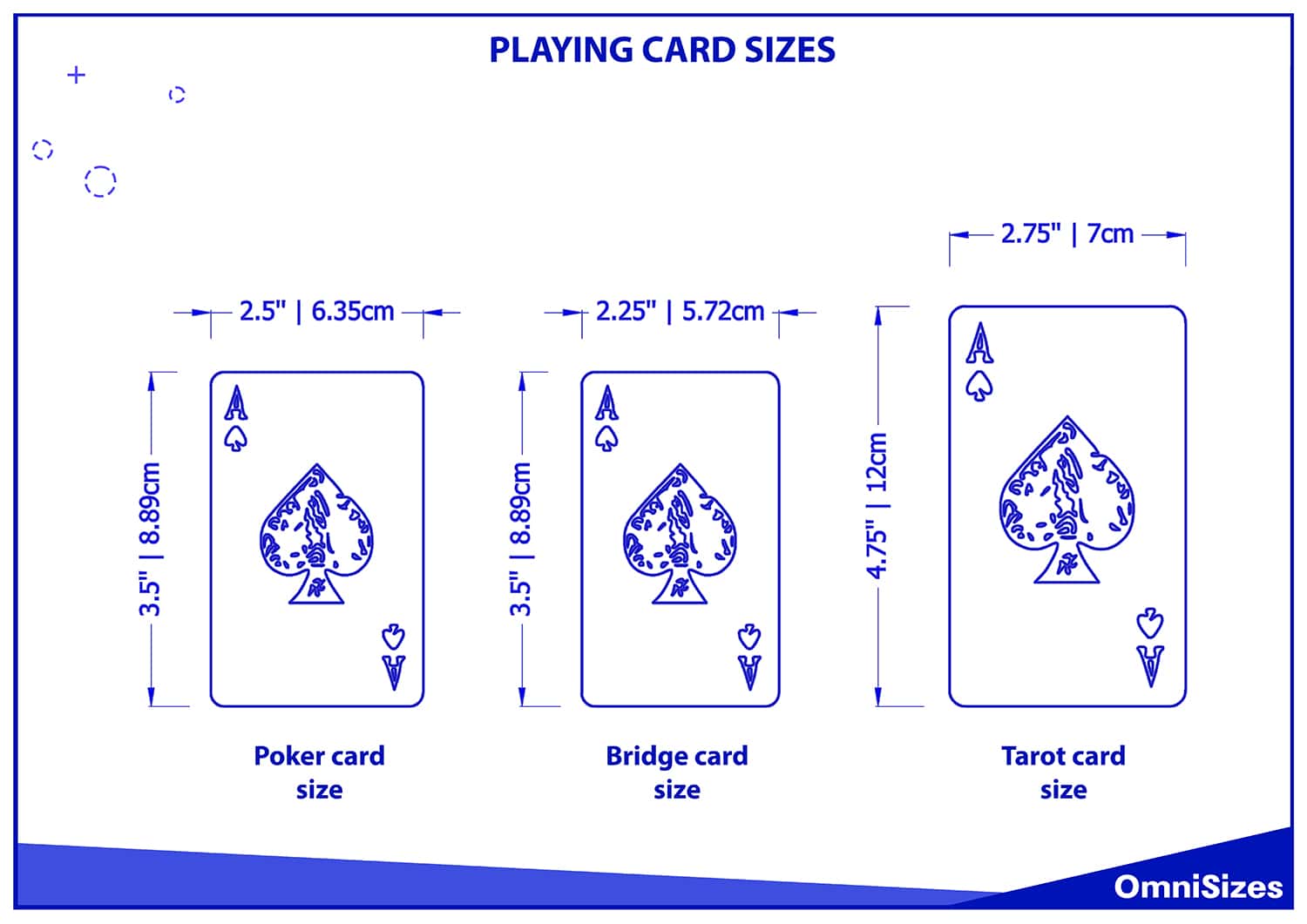
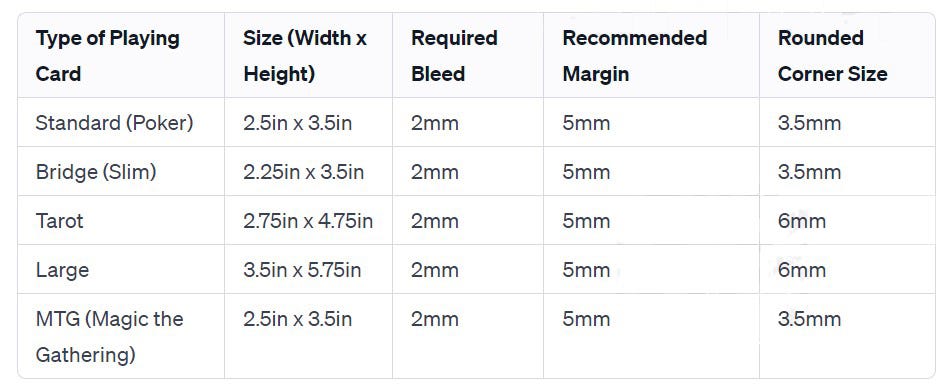
- Standard playing card size: 2.5 inches (width) x 3.5 inches (height)

playing card dimensions
These dimensions allow cards to be comfortably handled, shuffled, and dealt. Additionally, when designing your cards or ordering custom packaging, it’s important to note:
- Required bleed: 2mm along each edge to prevent white borders after cutting
- Recommended margin: 5mm for safe design area, avoiding important graphics near edges
- Rounded corner size: 3.5mm to ensure smooth handling and prevent damage
These precise measurements not only ensure a professional look but also help in crafting protective packaging that fits snugly without excess space that could cause cards to bend or move.
Exploring Different Playing Card Sizes and Their Packaging Needs
Playing cards come in various formats depending on the game, purpose, or design preference. Here are some of the most popular sizes and the packaging considerations for each:
Bridge Cards: Slim and Sleek
Bridge cards are slightly narrower but maintain the same height as poker cards. They measure:
- Bridge card size: 2.25 inches x 3.5 inches
Because these cards have a slimmer width, custom boxes designed for bridge cards should be narrower to ensure a tight fit, avoiding rattling inside the packaging box. Retailers and manufacturers often use this size for games requiring easier handling or smaller decks.
- Bleed and margin: same as poker cards
- Rounded corner size: 3.5mm
Packaging designed with these exact measurements provides a premium feel and improves the product presentation, giving your cards a professional edge in the market.
Tarot Cards: Tall and Unique
Tarot decks are typically larger and include 78 cards, each with detailed artwork. Their dimensions differ significantly:
- Tarot card size: 2.75 inches x 4.75 inches
Because of the height difference, tarot cards need custom-sized packaging that protects the elongated shape and allows easy access without damaging the edges.
- Bleed: 2mm
- Margin: 5mm
- Rounded corners: Larger at 6mm to match card design
Packaging solutions for tarot cards often include premium packaging like rigid boxes or magnetic closures that enhance the mystique and elegance of the deck, further reinforcing brand identity.
Large Playing Cards: Oversized and Fun
Some card decks are designed larger for educational purposes or novelty use. These oversized cards measure:
- Large playing card size: 3.5 inches x 5.75 inches
Due to their size, these cards require display cases or larger retail boxes that can hold the bulkier format while offering protection and ease of use.
- Bleed and margin: same as tarot cards
- Rounded corners: 6mm
Bulkier packaging means higher material costs, but the impact on marketing materials and consumer appeal is significant, making large cards a memorable product.
MTG (Magic: The Gathering) Cards: Customizable but Standard Size
Magic: The Gathering cards share the standard poker card size of 2.5 inches x 3.5 inches, but many players create custom MTG cards for personal or gifting purposes.
Packaging for MTG cards should be durable and tailored to frequent use, since these cards are often collected and handled repeatedly.
- Packaging solutions: durable tuck boxes, rigid boxes, or deck sleeves for added protection
- Material choice: protective packaging to prevent wear and tear
Thickness of Playing Cards and Its Impact on Packaging
While size in length and width is critical, the thickness of playing cards plays an equally important role in packaging design.
- Standard playing card thickness: approximately 0.2mm (14pt silk card with lamination)
Thicker cards require slightly larger boxes, especially when accounting for the number of cards in a deck. This means your shipping boxes or retail packaging need to accommodate card thickness plus any protective inserts.
When ordering packaging, always consider:
- Card thickness
- Number of cards per deck
- Additional materials (instruction booklets, dice, tokens)
Our playing card box calculator can help you find the perfect box size by inputting these dimensions to ensure a snug, secure fit.
Why Choosing the Right Playing Card Size Matters for Packaging
Selecting the correct card format isn’t just about the cards themselves — it heavily influences your retail packaging and overall customer experience.
- Product presentation: A perfectly sized box adds a premium feel and makes your deck more attractive on shelves.
- Brand identity: Customized packaging that matches your card size reinforces your brand’s professionalism.
- Protective packaging: Proper sizing prevents damage during shipping and handling, reducing returns and complaints.
If your packaging is too large, cards may slide and get damaged; too small, and the cards might get bent or hard to remove. Therefore, investing in custom packaging boxes designed with precise playing card dimensions helps your product shine and build trust with customers.
Customizing Your Card-Sized Packaging with Packaging Box
At Packaging Box, we understand that your playing cards deserve packaging that complements their size and quality. Our experts work closely with you to:
- Measure your card dimensions accurately
- Select materials that provide strength and visual appeal
- Design packaging that aligns with your brand’s identity
Our custom packaging solutions include:
- Tuck boxes and sleeve boxes for easy storage and access
- Rigid boxes for premium presentation and maximum protection
- Display cases that highlight your cards on shelves or in exhibitions
- Shipping boxes tailored to your deck proportions, offering safe transit
With affordable pricing, bulk discounts, and fast delivery, you can order now or request samples to experience the quality firsthand. Plus, our team offers a free consultation to guide you through the best options for your card format and business needs.
Final Thoughts: Make Your Cards Stand Out with Perfect Dimensions and Packaging
Understanding the various playing card sizes — from standard poker cards to tarot and large formats — is essential for producing a product that appeals and lasts. Equally important is the packaging that houses your cards, affecting everything from protection to brand perception.
By combining precise playing card dimensions with tailored playing card dimensions, you create a compelling product that customers love to buy and display.
Whether you’re producing a small batch of custom flashcards or launching a full deck for retail, Packaging Box is here to help you every step of the way. Contact us today to get a quote, buy custom boxes, or learn how our packaging solutions can elevate your playing cards to the next level.
explore all ours new product
categories of packaging boxes
and blogs
Check out our website
1. What are the standard dimensions of playing cards?
Answer:
The most commonly used playing cards, called poker cards, measure 2.5 inches by 3.5 inches (63.5 mm by 88.9 mm). These dimensions provide a comfortable size for handling and shuffling. Another popular size is the bridge card, slightly narrower at 2.25 inches by 3.5 inches (57 mm by 88.9 mm), designed to be easier to fan when holding many cards. Tarot cards are larger, roughly 2.75 inches by 4.75 inches (70 mm by 120 mm), to accommodate detailed artwork.
2. Are all playing cards the same size?
Answer:
No, playing cards vary in size depending on their purpose. The two main standard sizes are poker cards (2.5″ x 3.5″) and bridge cards (2.25″ x 3.5″). Tarot cards and specialty cards come in larger or customized sizes. Additionally, novelty or mini decks may be much smaller than standard cards.
3. What are the playing card dimensions in millimeters?
Answer:
- Poker card: 63.5 mm (width) x 88.9 mm (height)
- Bridge card: 57 mm x 88.9 mm
- Tarot card: Approximately 70 mm x 120 mm
These metric dimensions are exact conversions from the standard inch measurements commonly used in card manufacturing.
4. What is the playing card size ratio?
Answer:
Most playing cards maintain an approximate aspect ratio of 7:10 (width:height). For example, poker cards at 2.5 x 3.5 inches follow this ratio. This ratio balances ease of handling, visual clarity, and portability.
5. What is the thickness of a typical playing card?
Answer:
Typical playing cards have a thickness ranging from 0.17 mm to 0.30 mm depending on the card stock and coating. Higher quality cards tend to be thicker and more durable, often laminated with plastic for protection and smoother handling.
6. What materials are playing cards made from?
Answer:
Most playing cards are made from layers of paper stock coated with a plastic finish. Common finishes include:
- Linen finish: Provides a textured feel for better shuffle and grip.
- Plastic coating: Makes the cards smoother and more durable, resistant to wear and moisture.
- 100% plastic cards: Fully waterproof and very durable, used in casinos and professional decks.
7. What are the standard pixel dimensions for digital playing cards?
Answer:
Digital cards depend on resolution, but a common size for on-screen poker cards is around 750 pixels (width) by 1050 pixels (height) at 300 DPI (dots per inch), which translates to a print size of 2.5″ x 3.5″. For web use, cards can be scaled to smaller sizes like 250 x 350 pixels for display while maintaining aspect ratio.
8. Can playing card dimensions be customized?
Answer:
Yes. While poker and bridge sizes are standard, many custom card makers offer cards in various sizes for novelty decks, promotional items, or games needing unique formats. Custom dimensions can range from small mini cards to oversized cards for visibility or artistic effect.
9. What is the ideal size for collectible card games?
Answer:
Most collectible card games (CCGs) like Magic: The Gathering or Pokémon use cards very close to the poker card size, around 2.5″ x 3.5″ (63.5 mm x 88.9 mm). This size is popular because it fits standard sleeves, binders, and playmats.
10. How do playing card sizes affect handling and gameplay?
Answer:
Larger cards like tarot cards are easier to see and showcase detailed artwork but are less portable. Poker cards balance visibility and handling comfort. Narrow bridge cards are designed to be easier to fan and hold when players manage more cards. Miniature cards can be harder to read but useful for portability or novelty.